
When the chilly winter arrives, many families start looking for an electric fireplace heater to keep their homes warm. Based on our couple installations, this guide will help you understand the key considerations when buying an electric fireplace. And this blog also provides practical installation tips to ensure a professional-looking result for your home.
Most of the practical tips and installation insights shared in this guide are from our recent installation of Mona Living Sonata 1500W 72-inch Electric Fireplace. Quite some online shops, like Kmart online shop, Woolworth online shop, BigW online shop, etc. sell Mona Living’s Sonata fireplace.
What Is the Most Popular Electric Fireplace?
If you Google “fireplace” or “electric fireplace”, you’ll notice that recessed (OR built-in) electric fireplaces dominate the search results. Their popularity comes from their realistic 3D flame effects, authentic-looking log sets, and sleek built-in appearance.
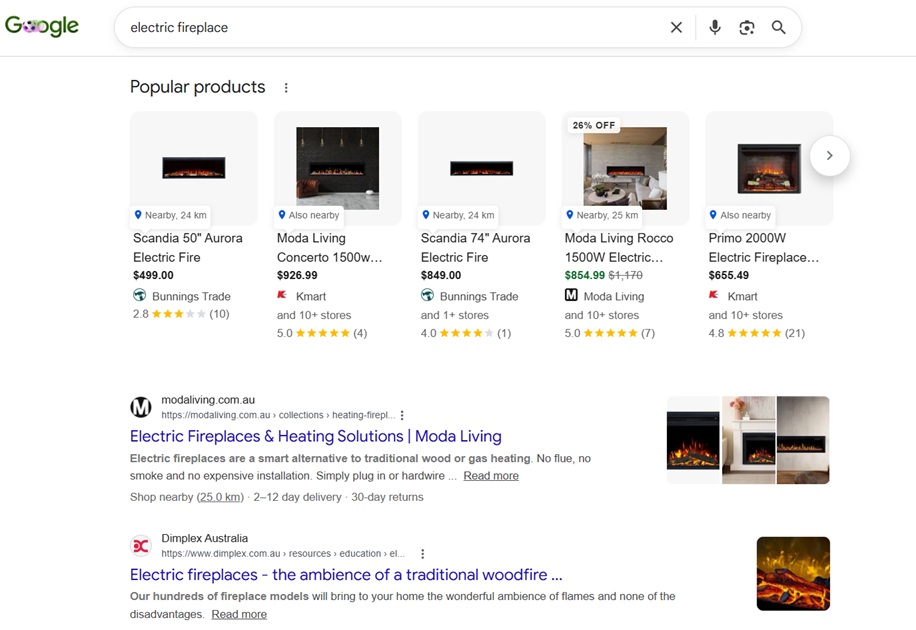
Most electric fireplaces offer wall-mounted installation option and built-in option. While most owner prefer to build their electric fireplace heater into walls for a more seamless and luxurious look. Paired with a large wall-mounted TV above, they can transform an ordinary living room into a stylish, contemporary entertainment space.
Combining realistic visuals, clean energy-efficient operation, and stylish modern aesthetics, recessed electric fireplaces have become one of the most popular alternatives to traditional fireplaces in Aussie’s homes.
Are Electric Fireplaces Worth Buying?
Definitely Yes! Electric fireplaces are worthwhile if you want an affordable and low-maintenance way to warm your living room without a chimney.
Unlike traditional wood-burning or gas fireplaces, electric fireplaces do not require gas lines, chimneys, or venting systems. Relatively speaking, electric fireplaces are easier to install, require minimal maintenance, and offer convenient day-to-day operation.
Most electric fireplaces draw between 1,500 and 2,000 watts of power. And they can operate once plugging directly into a standard household electrical outlet. With just a touch on screen or a press on remote control, they can provide instant warmth and create a cozy atmosphere in your room.
In addition to their clean and energy-efficient performance, recessed electric fireplaces can make your room look more contemporary and elegant. Their realistic 3D flame effects, authentic-looking log sets, and sleek built-in design create a stylish focal point that enhances the overall appearance of the space.
What Are the Downsides of Electric Fireplaces?
Electric Fireplaces Are Generally Not Designed to Heat an Entire Home
Most electric fireplaces model draw only between 1,500 and 2,000 watts of power. And their max out is at around 4,500 to 5,000 BTUs (British Thermal Units), equivalent to about 1.5kW of thermal power, making it ideal for small, enclosed spaces of approximately 10 to 15 square metres. They are designed only for supplemental heating for one specific room rather than for couple rooms, or a whole house.
By comparison, even a relatively small wood-fired heater, such as the Scandia Warmbrite 140, sold on Bunnings, can produce up to 15.6 kW of heat output, making it capable of warming areas of up to 140 square metres.
Fireplace electric fireplaces offer ambience and supplemental heat, but not the heating capacity of traditional wood-fired heaters.
An Electric Fireplace has Fan Operating and Airflow Noise
The noises generated by the built-in fan is another drawback of electric fireplaces. Most fireplace electric fireplaces use a fan-forced system that blows air over a heating element to warm the room. While this design provides instant heat, it can also generate noticeable fan or airflow noise, especially at full power.
Although the noise level is generally low and within an acceptable level, it may be noticeable in very quiet environments, such as bedrooms, studies, or home offices, where some users prefer complete silence.
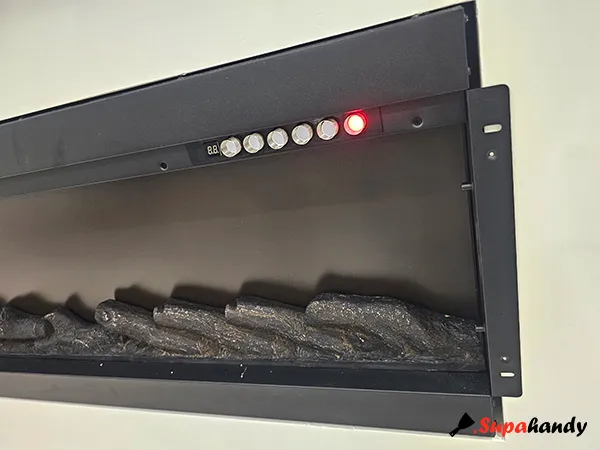
Like the Sonata electric fireplace heater, there is a long and hidden ventilation opening located above the front glass panel. The sections at either end of the vent act as air intakes, while the the centre section discharge warm air. As air is drawn into unit and forced through the heating system, the airflow can create a slight humming or whooshing sound. Although the noise is minimal, it may be noticeable in quiet environments, particularly when it is operating in full size.
Electric Fireplaces Are Just Fake Fireplaces with Fake Flames and Log Sets
The 3rd drawback is the artificial flames. The flame effect looks impressive and remarkably realistic, especially when combined with modern 3D flame technology and lifelike log sets. However, everyone knows that the flames are artificial. And they cannot fully replicate the natural movement, warmth, and unpredictability of a real wood-burning fire.
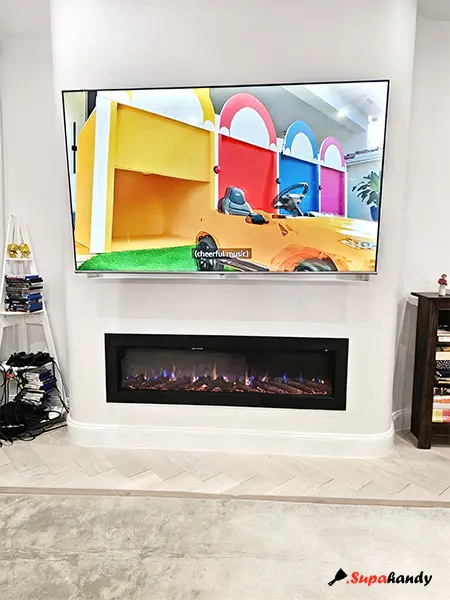
As shown in the photo above, the TV screen is significantly brighter and more colourful than the fireplace flame effect. As a result, when both are operating at the same time, the TV often becomes the dominant visual feature, drawing attention away from the fireplace.
An Electric Fireplace Does Not Operate Without Electricity
Obviously, recessed electric fireplaces share the same limitations as other types of electric fireplaces or electric heaters. Because they run entirely on electricity, operating costs can add up over time. Keeping the electric heater continuously run throughout the day, you can expect a noticeable increase in your electricity bills, especially during the colder months.
How Much Does It Cost To Run an Electric Fireplace?
You can calculate the exact cost for your specific unit with a simple formula:
Hourly Cost = Power used (in kW) x Electricity rate (per kWh)
For example, if your electricity rate is $0.40 per kWh, such as the EnergyAustralia Balance Plan (Home) peak rate in 2026, a typical 1,500-watt electric fireplace heater will cost about $0.60 per hour to run at its full heating capacity. And it would to be $6 if the electric fireplace run at its full capacity for ten hours per day; and sum to $500+ totally for three months.
How to Install a Recessed Electric Fireplace: Tips and Best Practices
Based on our real-world installation experience, we’ve learned that achieving a stylish and modern fireplace feature wall is not just about choosing the right electric fireplace heater.
Achieving a clean, flush finish for a false chimney breast or recessed fireplace wall requires accurate measurements, thoughtful planning, and quality workmanship. Customizing Your Recessed TV Wall is Not Hard At All give a step by step guide for building one recessed TV and fireplace wall based on our experience.
In this blog, we will share some detailed tips on how to build a recessed cavity for an electric fireplace heater.
How Much of Clearance Around an Electric Fireplace Cavity?
Actually, electric fireplace owner’s manual would tell you how much the size the cavity for electric fireplace heater. As owner, or installer, we don’t need to know how much the clearance we need. While it will much helpful if we understand their measurement required.
For example, the Moda Living Sonata Electric Fireplace owner’s manual provides the recommended wall cavity dimensions for each fireplace model. The measurements are specified down to the millimetre, ensuring the fireplace fits precisely within the recessed cavity.
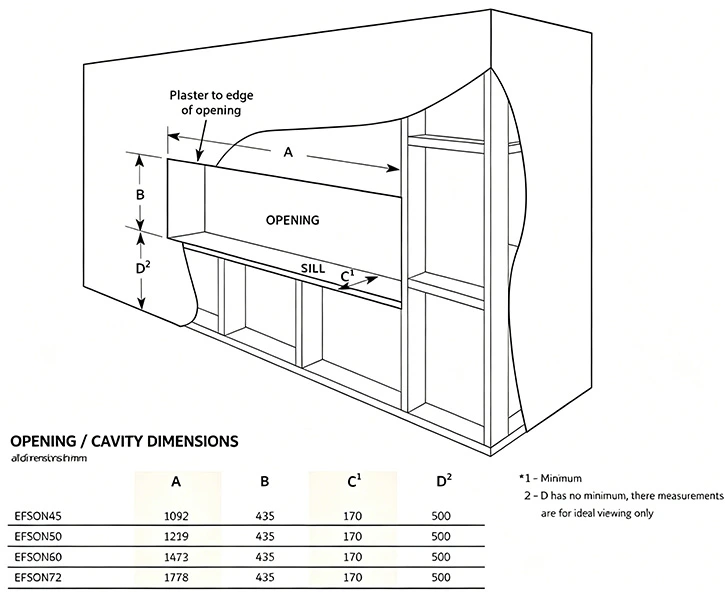
Comparing the Sonata fireplace dimensions with the recommended cavity measurements shows that the installation allows only a small tolerance of approximately 5–10 mm around the fireplace. To be precise, the allowed clearance at the top and bottom is around 5 mm, while the clearance on each side can range from 5 mm to 10 mm. This provides sufficient room for positioning the unit with a precise fit and avoiding noticeable gaps around the finished installation.
It is important not to exceed this tolerance, as any bigger gaps between the fireplace and the surrounding wall finish may remain exposed or affect the installation.
Only The Face Side of The Cavity Can be Finished by Plasterboard Lining
The Sonata fireplace cavity dimension drawing highlights one of the most important installation details in just a few words: “Plaster to Edge of Opening”. This means you should install the finishing lining, such as plasterboard, only on the front face of the wall cavity.
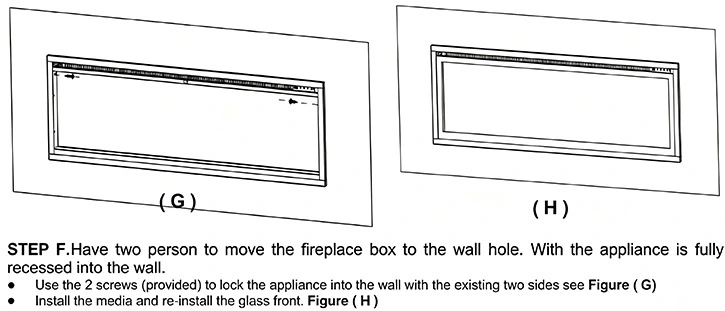
Why is this the case? We can find the answer in Figure (F) on page 7 of the owner’s manual, as shown below.
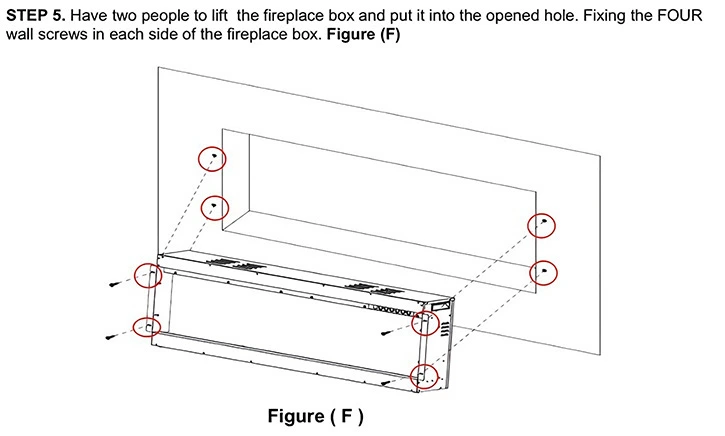
The fireplace unit attaches to the wall frame with four mounting screws, two on each side. The screw holes sit on narrow mounting flanges that extend only 25-30 mm beyond the main body of the unit. If you add 10 mm lining materials inside the cavity, the framing may no longer align with the fixing points, preventing the screws from properly engaging the timber or steel studs. Therefore, install finish linings only on the front face of the wall, as intended by the manufacturer.
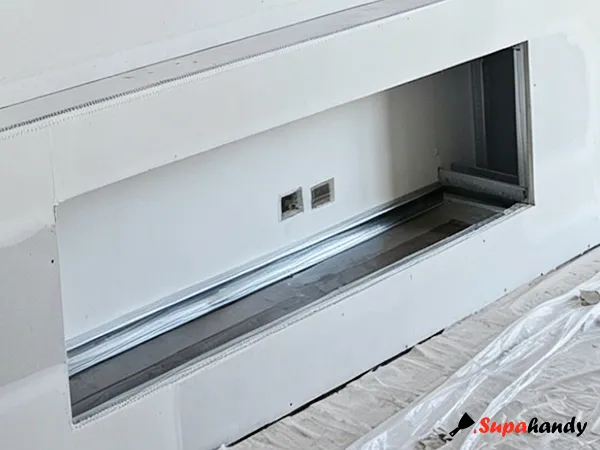
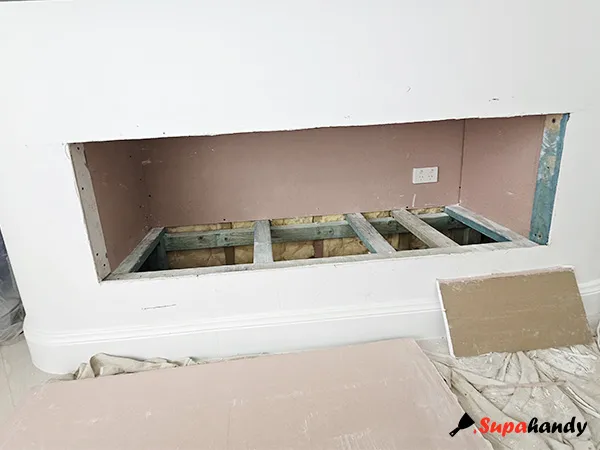
This is why we line the inside of the TV wall cavity with plasterboard, while leaving the steel or timber framing inside the fireplace cavity exposed.
As to details for TV wall cavity, or the most popular TV wall, or how to build a recessed TV wall cavity, you can refer to our blog: Customizing Your Recessed TV Wall is Not Hard At All!
When Should the Recessed Fireplace Cavity Be Lined with Plasterboard?
In some situations, however, it may be necessary to line the inside of the fireplace cavity. For example, when we install the fireplace on an external wall, we may consider to build a concealed barrier to prevent fibreglass insulation flowing into the room through the fireplace’s ventilation system. In this case, we would sheet the cavity inside. While we would keep the framing around the opening exposed to ensure the fireplace mounting screws can still securely fixed into frame.
It is important to understand that different brands of electric fireplace — or even different models from the same brand — may have quite different installation methods.
For example, another Mona Living model, the Concerto, uses a different mounting method. The fixing screws are located inside the fireplace cavity rather than at the front of the unit.
Timber vs Metal Framing for an Electric Fireplace Cavity?
We recommend using timber framing for an electric fireplace cavity whenever possible.
The fireplace unit has a metal casing and it sits directly against or very close to the surrounding frame once installed. A metal stud frame may increase the likelihood of vibration or friction noise when the fireplace fan is operating. This vibration or friction noise may become more noticeable especially when the fireplace is touching nearby framing. Timber framing is less prone to transmitting these vibrations and can contribute to a quieter, more stable installation.
Do We Need Install Firechek Plasterboard around Fireplace Cavity?
It is always a good idea to double-check with manufacturer the cavity and wall lining need Fyrecheck plasterboard or not. Requirements can vary between brands, or models, and following the manufacturer’s specifications is essential for a safe and compliant installation.
We didn’t see any Fyrecheck requirements from Sonata fireplace owner’s manual. And their sales says “the Sonata produces heat up till 1500w, so installing Fyrecheck plasterboard won’t be necessary”. This electric fireplace heater use a heating wiring element combined with an internal fan to blow warm air into the room. The sides of the fireplace unit has air intake vents and typically they do not generate significant heat. During operation, only the top metal casing near the warm air outlet may become noticeably warm to the touch, reaching temperatures of around 60°C.
Always Read the Fireplace Manufacturer’s Manual Before Installation
Different fireplace brands—and even different models from the same brand — can have varying installation requirements and specifications.
We found some very important installation information hidden in just a few words or a single sentence in the manual. That’s why it’s essential to read the manual carefully and fully understand the all key information before starting the installation.
By sharing our first hand experience, we hope to help you avoid costly mistakes and make your installation process smoother and more efficient.
Contact the Manufacturer’s Sales Team for Further Information
Don’t rely solely on the owner’s manual.
While manufacturers typically provide the most installation requirements, additional details are often available from their sales or technical support teams. If you have any questions about how the fireplace operates, how its ventilation works, etc. seek clarification before purchasing. Doing so can save considerable time, cost, and frustration during the installation process.
Editor’s Note
Based on our experience installing several electric fireplaces, this guide highlights the key factors to consider when purchasing an electric fireplace. It also provides practical installation tips to help you to install new recessed electric fireplace with a professional-looking result for your home.
Have you found an error or have a better idea to share? Please let us know. Your feedback helps us improve the quality and usefulness of our guides, helping more homeowners make informed decisions and install their fireplaces with confidence.